Digital Lifelines Are Not Optional: They Are Human Rights Infrastructure
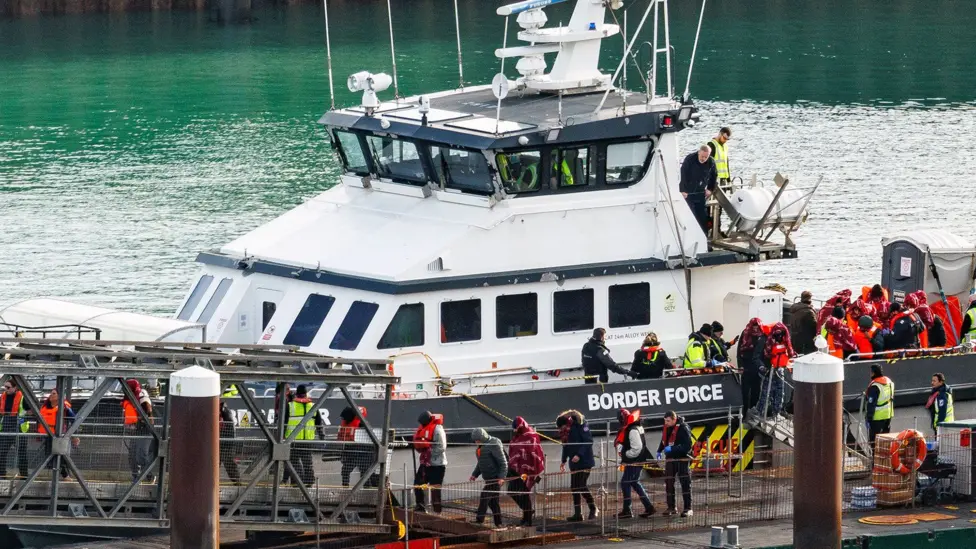
Yesterday’s announcement that Home Office authorities can now seize mobile phones from people deemed to be in the UK illegally without arresting them, and even check their mouths for concealed SIM cards, is deeply concerning. Furthermore, this new piece of legislation also notes that authorised actors of the state can also take biometric information from individuals.
For us, this raises a deeper question that goes far beyond any single policy decision: what happens when the state expands its digital reach faster than it strengthens its safeguards? What happens, really, when this is happening in a democracy moving further to the right?
For people fleeing conflict, persecution, or trafficking, a phone is not a luxury. It is the only route to legal representation, healthcare, support, contact with family, evidence‑gathering for asylum claims, protection from exploitation.
We know from multiple evaluations of digital inclusion programmes that access to a device and data is directly tied to safety, wellbeing, and the ability to exercise rights. When digital access is removed or restricted, people’s health deteriorates, their isolation increases, and their ability to navigate essential services collapses.
In other words: digital access is a lifeline, not a loophole.
The slow creep of state powers deserves more scrutiny
The UK’s own State of Digital Government Review acknowledges that the public sector now holds vast digital capacity, with over £26bn spent annually and millions of interactions mediated through digital systems. Yet the same review warns that many of these systems were not designed for a digital age, and that oversight, transparency, and accountability have not kept pace.
This matters, because every new power layered onto a digital system risks reducing previous freedoms, normalising ‘exceptional’ measures, expanding surveillance without proportionality tests and creating data trails that outlive the policy that created them, that could be used in ways we can barely imagine to control and limit our lives.
When the state gains new powers over people already in precarious situations, the burden of proof must be higher, not lower.
Three Questions We Should All Be Asking
1. Do we have safeguards that genuinely minimise the loss of previous freedoms?
Safeguards cannot be theoretical. They must be independently monitored, transparent, challengeable and designed with the people most affected.
At present, many digital systems across government lack these foundations — a gap highlighted repeatedly in official reviews.
2. Will there be meaningful intelligence to judge whether these powers are proportionate?
Proportionality requires evidence, impact assessments, rights‑based analysis and ongoing evaluation. Without this, “proportionate” becomes a political claim rather than a measurable standard.
3. Is this subject to regular, independent review?
Any expansion of state power should come with:
- Short term clauses for review
- independent oversight
- public reporting
- mechanisms for civil society challenge
If the review mechanisms are weaker than the powers themselves, the balance is already lost.
And our fourth question: Do we actually care, as a society, about the people behind these policies?
Those of us working directly in the places where people are moved, the so‑called “hotels” that are in reality the most basic, isolating forms of accommodation, see the truth every day. We know that even the idea of offering people access to former barracks in disrepair sparks public outrage. Yet the outrage is rarely about the conditions people are forced to live in. It’s about their presence.
So we have to ask: where is our humanity? Where is our shared care?
If we can ‘tolerate’ people living in institutional spaces designed for containment rather than dignity, then the question is no longer about policy design. It’s about who we are becoming and what freedoms we are willing to let erode when the people affected are those with the least power to resist.
Digital Rights Are Human Rights and They Must Be Defended Proactively
We cannot treat digital access as a side issue when it is now the primary route to justice, safety, and participation. Nor can we allow the slow normalisation of expanded state powers to go unchallenged simply because they are digital, invisible, or framed as administrative efficiency.
The question is not whether the state can do these things. It is whether it should and under what conditions.
If we want a society where digital systems uphold rights rather than erode them, we need stronger safeguards with transparent oversight. We should expect proportionate, deeply scrutinised powers within a commitment to centring the experiences of those most affected.
Every day in our work, we see families living in limbo, people navigating unimaginable trauma in spaces that offer no privacy, digital isolation compounding emotional isolation and rights that barely exist on paper and increasingly not in practice.
And we also see the public reaction. Not outrage at the conditions, but outrage at the idea that people seeking safety might be treated with even a fraction of dignity.
So the question becomes unavoidable: where is our shared care?
If we can accept these conditions for some people, we normalise them for all people. The erosion of rights always begins at the margins.
This is why digital lifelines matter. This is why safeguards matter. This is why proportionality and oversight matter. Because when humanity is already stretched thin, the expansion of state powers without robust checks doesn’t just risk harm, it guarantees it.